
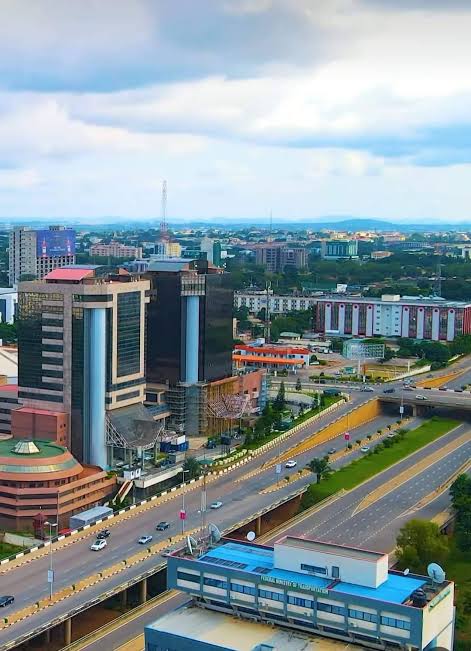
The Housing Development Advocacy Network (HDAN) has raised alarm over the worsening housing affordability crisis in the Federal Capital Territory (FCT), calling for an urgent affordable housing strategy that ensures that the types and prices of houses being supplied reflect the actual incomes of Abuja residents.
In a report contained in a special housing market report titled “Abuja Housing Crisis 2026: 1.7 Million Housing Deficit Amid Rapid Population Growth, Rising Rents and Empty Homes,” the Organisation lamented that Abuja/FCT is facing an estimated 1.7 million-unit housing deficit.
The report said the gap is driven by rapid population growth, rising rents, inadequate affordable housing supply, infrastructure challenges, limited access to housing finance and a growing mismatch between the houses being developed and the purchasing power of residents.
HDAN said Abuja is increasingly confronted by a serious housing contradiction: while millions of residents need decent and affordable accommodation, a significant number of completed properties, particularly in the upper-end and luxury segments, remain beyond the financial reach of the majority of residents and are therefore under-occupied.
The organisation stressed that Abuja’s housing crisis can no longer be viewed simply as a shortage of buildings.
“Abuja’s housing problem is not only about how many houses are being built. The fundamental issue is whether the houses being delivered are affordable, accessible, appropriately located and suitable for the people who actually need them,” HDAN stated.
According to the Network, civil servants, young professionals, informal-sector workers and low- to middle-income households are increasingly finding it difficult to secure decent accommodation within reasonable distance of their workplaces.
HDAN identified high land prices, infrastructure costs, expensive building materials, rising construction costs, limited mortgage accessibility and the concentration of development in higher-income market segments as major factors pushing homeownership beyond the reach of many Abuja residents.
The pressure is equally evident in the rental market, where rising rents are forcing many households to relocate farther from central Abuja in search of cheaper accommodation.
HDAN warned that this trend has wider economic consequences. Workers who are pushed farther away from employment centres spend more money and time on transportation, while satellite communities experience increasing pressure on roads, transportation systems and other public infrastructure.
The Network further warned that failure to substantially increase affordable formal housing could accelerate the growth of informal settlements as lower-income households search for accommodation within their financial means.
FCT Needs an Urgent Affordable Housing Strategy
HDAN called on the Federal Capital Territory Administration, relevant federal housing institutions, financial institutions, developers and other stakeholders to develop an urgent FCT Affordable Housing Strategy based on credible housing data, household income and effective demand.
The Network said Abuja cannot solve its housing crisis by concentrating mainly on the number of houses constructed. Housing delivery must be linked directly to what residents earn and what they can realistically afford to pay for rent, mortgages or other homeownership schemes.
HDAN recommended that the strategy should prioritise:
- Large-scale delivery of affordable homes targeted at low- and middle-income households.
- Affordable rental housing and rent-to-own programmes.
- Faster and cheaper access to land for genuine affordable housing developments.
- Government infrastructure support and incentives for developers delivering houses within clearly defined affordable price ranges.
- Expansion of mortgage and alternative housing-finance products for civil servants, young professionals and informal-sector workers.
- Improved transportation links between affordable residential communities and major employment centres.
- Better housing data showing where homes are needed, the categories required and what residents can realistically afford.
- Greater use of local building materials, innovative construction technologies and alternative building systems to reduce construction costs.
- Stronger collaboration between government, private developers, mortgage institutions, cooperatives and other housing-sector stakeholders.
HDAN also called for greater attention to the difference between housing need and effective housing demand.
According to the Network, a household may desperately need a home but still be unable to participate in the formal housing market because the available houses are priced far above its income.
This, HDAN said, helps explain why Abuja can simultaneously record a huge housing deficit while having completed houses that remain vacant or under-occupied.
“The contradiction is becoming increasingly difficult to ignore: millions of people need decent housing, yet thousands of completed homes remain beyond their financial reach. Building more houses without solving affordability will not solve Abuja’s housing crisis,” the Network stated.
HDAN therefore urged policymakers to make affordability a major measurement of housing-sector performance in the FCT.
The organisation said government and industry stakeholders should go beyond announcing the number of housing units constructed and begin asking how many of those units are actually affordable to the population they are intended to serve.
According to HDAN, Abuja’s housing policy must integrate land delivery, infrastructure, mortgage finance, rental housing, transportation, urban planning and household incomes rather than treating housing construction as an isolated intervention.
The Network said the most important question confronting Abuja’s housing market in 2026 should no longer simply be:
“How many houses can Abuja build?”
The more important question is:
“How many Abuja residents can afford the houses being built?”
HDAN maintained that this question should become the foundation of the next generation of housing policy in the Federal Capital Territory.