
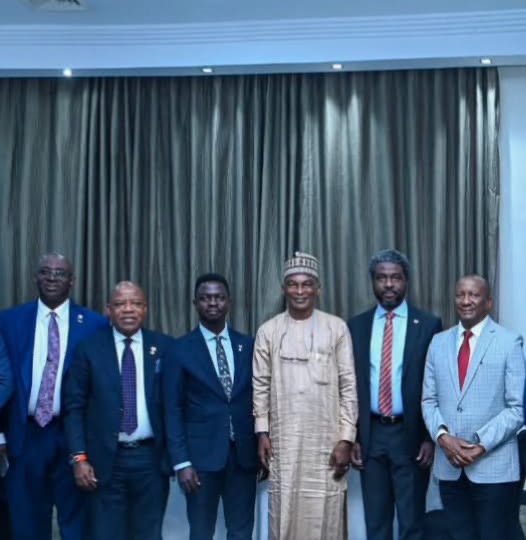
The President, International Real Estate Federation (FIABCI), Nigeria, Ayodeji Odeleye, has promised to make Nigeria an international real estate destination and a reference point in Africa for international investors.
He spoke at his induction as president of the Nigerian chapter, alongside 16 new members, in Lagos.
He said Nigeria has the potential to attract millions of dollars
into the economy through real estate, judging from the successful hosting of the World Congress in Lagos, the first time the prestigious global gathering was held in Africa.
He said: “That achievement was historic and demonstrated that Nigeria could welcome the world and that Africa could provide a platform for the global real estate community. We proved to the global real estate world that Nigeria can lead the conversation.”
“My task as FIABCI president, Nigeria, will be to turn our global network into opportunities for our members. To understand how to turn international relationships into business, knowledge, and investment. Including how to make the Nigerian real estate profession more visible within the global FIABCI’s family and to ensure that when the world thinks about the future of African real estate, Nigeria will be part of the conversation, not merely as an observer, but as a contributor and a leader,” he stated.
Furthermore, he said his administration would lead a membership drive and mentorship programme for younger members, while encouraging competitive skills acquisition, training and global exposure for business opportunities.
Odeleye pledged that under his watch, the association would continue to grow in maturity, transparency, unity and institutional strength.
According to him, FIABCI in Nigeria must not be perceived as an organisation centred in one city.
“Our members in Abuja, Port Harcourt and beyond, and other strategic locations, must be active participants in the life of this organisation,” he said.
He pledged to establish and strengthen functional zones with defined leadership, clear responsibilities, accountability and a regular regime of activities.
“We are here to build systems and develop people, to build an institution that will outlive every member of this current executive council. That is why legacy will not
merely be our theme, it will be our organising framework, a name on the register, it must mean belonging,” he added.
He commended the immediate past president, Mr Akin Opatola, for his inclusive leadership style, which led the chapter through the historic 75th World Congress in
Lagos, held in June last year.
He said hosting the congress required strong leadership, courage, discipline and, above all, teamwork, which he described as Opatola’s hallmark.
According to him, Opatola listened even when it was easier to speak, took difficult decisions when it was easier to postpone them, and put the interests of members, the profession and the wider real estate sector above personal considerations.
He said: “FIABCI Nigeria has been in existence for close to 53 years but a lot of people didn’t know us, we were only talking among ourselves, doing business among ourselves but it wasn’t good enough. Luckily we won the hosting right of the World Congress, and we went right to the top to get president Bola Tinubu to buyin into project, other ministers and the Lagos State Government and it was a huge
success.”
“Real estate business is not done in isolation. We see a lot of developers amongst us.
Most of the time, they like to build estates, and we say, no, you should be building communities. So, when we engage government, even in terms of infrastructural
development, they can benchmark with our members because we have the reach, skill and exposure.”
“We have webinars with our international colleagues, global best practice is something that is conversant with us. So, we can always lay that at the forefront of government officials for the benefit of our Nation.”
Opatola also said he encouraged collaboration with relevant government agencies.
According to him, the idea was to build the skills of relevant government officials through exposure to international conferences, especially where countries with best practices could showcase their achievements.
Reflecting on his learning curve as president, he said: “Honestly, I thought time was my friend, that I would be able to do so many things and secondly is that in leadership you’re only as good as the executives that you carry along. So, if your executives are not strong, not willing to support, there’s also a challenge there.”