
Africa’s real estate market is gathering pace, underpinned by rapid urbanisation, rising investment flows and growing demand for housing, with new projections showing sustained expansion despite structural constraints across the continent.
According to industry data from 6Wresearch, the sector was valued at $160.5 billion in 2024 and is projected to reach $282.4 billion by 2031, reflecting a compound annual growth rate of 8.6 per cent. Separate estimates indicate the market grew to $233.51 billion in 2025 and could climb further to $347.31 billion by 2034, albeit at a more moderate growth pace.
Analysts say the contrasting projections reflect differing methodologies, but agree on one central trend: Africa’s property market is expanding rapidly as cities absorb millions of new residents.
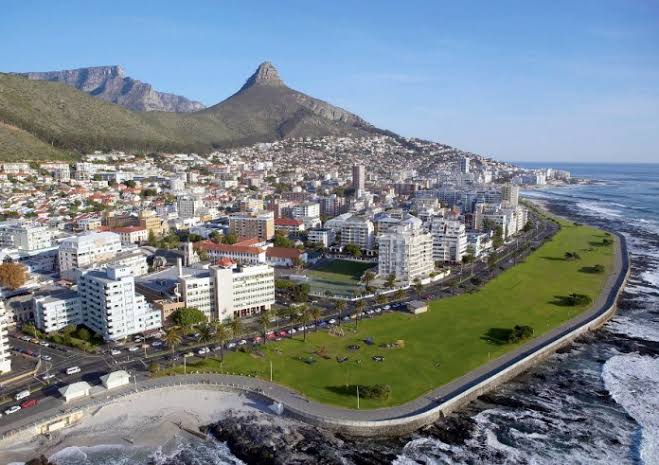
The continent’s urban population is projected to reach 722 million by 2026, intensifying pressure on housing, offices and retail infrastructure. In cities such as Lagos, Nairobi, Cape Town and Cairo, this shift is already reshaping property markets and pushing developers toward mixed-use and high-density projects.
Foreign direct investment is also playing a growing role, particularly in commercial and high-end residential segments. Investors from Asia, Europe and the Gulf are increasingly partnering local developers to tap into rising demand and improving regulatory frameworks.
“Global capital is coming into African real estate not just for returns, but for diversificationWith yields in prime markets ranging between 7 and 11 per cent, Africa is outperforming many developed regions,” analysts
Smart city projects are emerging as symbols of this transformation. Developments such as New Administrative Capital and Konza Technopolis are attracting international attention, offering integrated environments that combine residential, commercial and technological infrastructure.
However, the market continues to face significant structural challenges. Limited access to mortgage financing remains a major barrier, with less than five per cent of adults in Sub-Saharan Africa holding formal mortgages, according to housing finance data.Land tenure complexity and regulatory uncertainty also weigh on investor confidence. Only about 30 per cent of land in Sub-Saharan Africa is formally registered, creating risks around ownership and limiting access to financing.
Infrastructure deficits further compound the challenge. Developers across the continent often shoulder additional costs of up to 30 per cent to provide power, water and road access, eroding margins and slowing project delivery.
Despite these constraints, opportunities are expanding, particularly in affordable housing. Governments are increasingly prioritising housing programmes to address deficits running into millions of units across countries such as Kenya, Ghana and Nigeria.
In Nigeria, the continent’s largest real estate market by size, the sector is projected to reach about $2.4 trillion this year, reflecting strong underlying demand despite inflation and high construction costs. Earlier projections had placed the market slightly higher at $2.5–$2.6 trillion for 2025, but analysts say the revised estimate provides a more realistic picture.
Property prices in Lagos have continued to rise, particularly in infrastructure-linked corridors such as Lekki and Ibeju-Lekki, where appreciation rates have reached as high as 20 to 25 per cent. Yet affordability pressures and tight credit conditions are pushing more residents toward rental housing.
Across the continent, new trends are reshaping the market. Logistics and warehousing are expanding under the African Continental Free Trade Area, while student accommodation and ESG-certified buildings are attracting strong investor interest due to higher yields and occupancy rates.
Experts say the future of Africa’s real estate sector will depend on how effectively governments and private players address financing gaps, land reforms and infrastructure deficits.
“Africa’s real estate story is one of opportunity balanced by complexity,” an analyst said. “If the structural challenges are addressed, the sector could become one of the most powerful engines of economic growth on the continent.”